
For more in-depth information, visit ouroral health care library.
New York City is a place that moves fast—and expects its healthcare to keep up. Between long commutes, demanding work schedules, and family responsibilities, finding time for separate medical and dental appointments has become nearly impossible for many New Yorkers.
Yet in 2025, a Dentist in Astoria changed that reality forever.
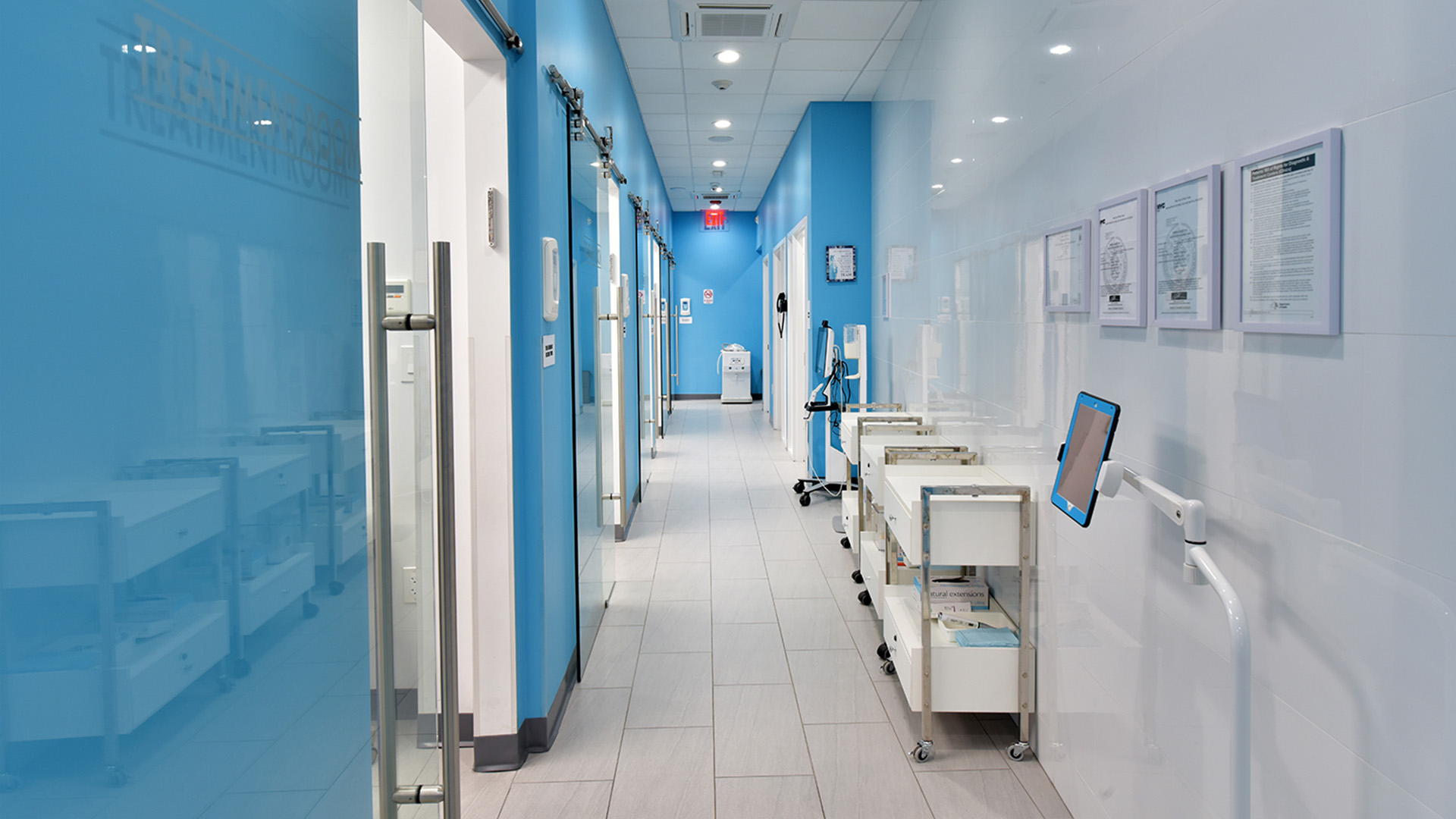
MediDental Care, a leading dentist in Astoria, became the first dental office in New York City to integrate full medical and dental services in a single chair, during a single visit. This breakthrough wasn’t born from convenience alone—it came from a mission to reshape what healthcare could look like for real people living real lives.
Today, MediDental Care stands as a state-approved Article 28 facility offering an unprecedented care model: medical exams, dental treatment, physicals, vaccines, lab work, and oral care—all completed in one seamless appointment. The practice is committed to advancing health and care research and medical research through its integrated model, contributing to improved patient outcomes and evidence-based care. MediDental Care serves a diverse demographic and health profile representative of New York City's population. As other offices look to catch up, MediDental Care continues to define what modern, patient-centered healthcare can and should be.
MediDental Care began in 2018 with one question: Why is getting healthcare so hard for everyday New Yorkers?
Founder and CEO Emanuel Inoyatov witnessed firsthand the burden patients faced—especially working families managing multiple appointments across multiple facilities. One story in particular stayed with him: a mother who postponed her checkups for months because she could not take additional time off work.
“That conversation reminded me of my own mother,” Inoyatov shared. “Always putting her health last just to make sure her family was taken care of. I knew we needed to build something that made life easier, not harder.”
This was the spark that shaped MediDental Care’s long-term vision: Create a healthcare system centered around the patient—not the other way around.
From the start, MediDental Care was designed to ensure that every intervention leads to a clinically important difference in patient outcomes, not just greater convenience.
Over the years, this commitment guided every expansion, every hire, and every decision—culminating in the groundbreaking achievement that now defines MediDental Care’s identity.
In 2025, MediDental Care launched a model that no dental office in the city had ever achieved:
This unified approach to patient records and coordinated workflow not only streamlines care but also enhances internal consistency in patient care and data management.
This advancement was made possible by:
MediDental Care’s new model does more than combine two appointments—it connects two sides of healthcare that should have never been separated. Medical and dental health are deeply linked, and MediDental Care became thefirst dentist in Astoria to unite them in a way that respects both science and the patient’s time.
What does this look like for a patient?
A mother can come in for her dental cleaning—and leave with her physical exam completed. A senior can receive dental treatment and blood pressure monitoring without visiting another facility. A busy professional can update vaccines and dental X-rays in the same appointment. A patient with chronic conditions can get medical review and oral evaluations without repeating their medical history twice.
One appointment. One chair. One team working together.
The impact goes beyond convenience. It reduces:
It also strengthens patient outcomes. Medical professionals catch early signs of dental-related health issues; dental professionals spot symptoms of systemic conditions. The patient receives a comprehensive view of their health in real time.
To ensure meaningful improvements, the team uses several patient reported measures and patient reported outcome questionnaires to assess physical function, average joint pain, and patient rated joint pain, making sure that any observed changes meet the minimal clinically important difference for each patient.
This is what modern care should look like—and in Astoria, it already does.
For decades, dentistry and medicine functioned as two separate universes, despite being biologically intertwined. Gum disease increases the risk of diabetes. Poor oral health affects cardiovascular conditions. Infections in the mouth can impact the entire body.
Yet most healthcare systems treat these connections as afterthoughts.
MediDental Care rejected that outdated model and built a new one.
In the one-chair system, medical providers and dentists share:
The integrated system also allows for linking measurement error across disciplines, ensuring that measurement properties such as reliability and validity are maintained, and that care is guided by a robust clinical assessment perspective.
This synergy eliminates the communication gaps that often lead to delays, misdiagnoses, or unresolved issues.
It is healthcare that finally acknowledges the full picture.
MediDental Care’s Article 28 certification places the practice in a select group of New York State–approved facilities able to offer both medical and dental services under one roof.
For patients, this translates to:
Article 28 facilities follow strict protocols for cleanliness, sterilization, emergency readiness, and patient protection.
The New York State Department of Health monitors accredited facilities closely, ensuring care meets the highest medical standards.
Unlike traditional dental offices, MediDental Care can provide services such as:
Many insurance plans integrate more smoothly in Article 28 facilities, making care more accessible.
This level of credentialing positionsDr. Regina Murdakhayeva, DDS and MediDental Care as a leader not just in Astoria or Queens—but across New York City.
According to Inoyatov, the vision behind MediDental Care was never about technology alone—it was about empathy.
“We built this for real people,” he said. “People who are juggling work, kids, school, bills, life. People who don’t have time for three different appointments in three different places.”
From the moment patients walk in, that philosophy becomes clear. The integrated model supports everyday self management strategies and aligns with usual clinical practice, making care more accessible and effective.
Patients don’t need to come back next week for the “other half” of their care.
Every provider sees the same chart.
Communication is internal and immediate.
Everything is coordinated in a streamlined system.
Patients who once stressed about scheduling now experience relief—a rare feeling in healthcare today.
MediDental Care’s identity is still deeply rooted in the Astoria community. The team knows their patients—their families, their stories, their health journeys. Yet the impact of their model reaches far beyond Queens.
Families travel from across boroughs for the one-chair experience. Working professionals book appointments during lunch breaks. Seniors appreciate the convenience of avoiding multiple commutes. And parents love the simplicity of handling all their children’s care in one visit.
The MediDental Care model is designed to serve entire patient populations, including entire patient populations waitlisted for procedures such as knee joint replacement, and to address the needs of patients awaiting knee surgery. This approach ensures that the knee joint replacement population and other groups receive care that is both representative and responsive to their specific needs.
MediDental Care has become a model other providers are now studying. But for the team, it remains about one thing:
Delivering care that respects patients’ time and honors their trust.
MediDental Care’s growth did not happen overnight. It was built through:
The practice maintains one of the highest patient satisfaction ratings in the area, and its reputation continues to expand as more New Yorkers share their experiences.
But according to Inoyatov, the greatest measure of success is something far simpler:
“No one should have to choose between their health and their job. Between their health and their kids. Between their health and their time.”
When it comes to healthcare, it’s not just about making appointments easier—it’s about making sure every visit leads to real, measurable improvements in your health. That’s where clinical significance and patient reported outcomes come into play, especially for New Yorkers managing chronic conditions like knee and hip osteoarthritis.
Patient reported outcomes are tools that let you, the patient, share how you’re feeling—your pain levels, your ability to move, and how your health affects your daily life. These are often captured through health status questionnaires and outcome measures like the Osteoarthritis Outcome Score (KOOS) or the Hip Disability and Osteoarthritis Outcome Score (HOOS). But how do we know if a change in your score is truly meaningful, or just a result of normal ups and downs?
That’s where the concept of minimal detectable change (MDC) comes in. The MDC is the smallest change in a patient reported outcome measure that can be confidently considered real—beyond the “noise” of measurement error. For example, if you’re awaiting knee or hip arthroplasty, or participating in the Osteoarthritis Chronic Care Program, your care team might use the six minute walk test or a joint pain numerical scale to track your progress. The MDC helps your providers know when a change in your results is statistically significant and not just a fluke.
For patients in knee and hip cohorts, understanding the MDC for outcome measures like the timed up-and-go (TUG) test or the visual analogue scale (VAS) for pain means your doctor can tell when your pain and functional impairment are truly improving. This is especially important in clinical trials and everyday clinical practice, where clinicians need to assess disease severity, monitor disease progression, and evaluate the effectiveness of both pharmacological and physical management strategies.
At MediDental Care, integrating medical and dental services in one chair means your entire health profile—including these patient reported outcome measures—is reviewed by a coordinated team. This approach ensures that any detectable change in your health status is caught early, interpreted correctly, and acted upon quickly. It’s a model that supports better patient outcomes, more informed decision-making, and a higher health-related quality of life.
By using MDC and other outcome measures, MediDental Care can offer care that’s not just convenient, but also clinically meaningful. It’s about making sure every improvement you experience is real, significant, and leads to a healthier, more active life—right here in New York City.
The success of MediDental Care’s one-chair medical-dental integration has accelerated plans for expansion. The team is actively preparing to bring this model to additional neighborhoods, with a vision of building a network of practices that prioritize accessibility, efficiency, and dignity. This expansion will be accompanied by a longitudinal study evaluating outcome measures to track the effectiveness of the integrated model over time.
The roadmap includes:
With each step, the mission stays the same: build a system patients can rely on—one that respects their time, supports their wellbeing, and treats their whole health.
MediDental Care’s one-chair model represents more than an innovation. It is a statement.
A statement that healthcare should fit the needs of people—not the other way around. A statement that patients deserve efficiency without losing compassion. A statement that excellence and empathy can live together in the same room—and in the same chair.
As the first dentist in Astoria to deliver this level of integrated medical and dental care,MediDental Care is not just setting a standard—it is redefining what healthcare looks like in New York City.
Looking ahead, the future of this integrated model will focus on achieving minimal clinically important improvements and minimal clinically important differences in patient outcomes, especially for those with hip and knee osteoarthritis, including hip osteoarthritis patients. Advanced assessments such as balance and ambulation tests will be used to monitor progress and treatment effectiveness, particularly in patients undergoing or awaiting hip or knee arthroplasty. Emphasizing minimal important difference and clinically meaningful change will ensure that care is truly patient-centered and outcome-driven.
And for patients across the city, that future is finally within reach.
Address:
2246 31st St, Astoria, NY 11105